


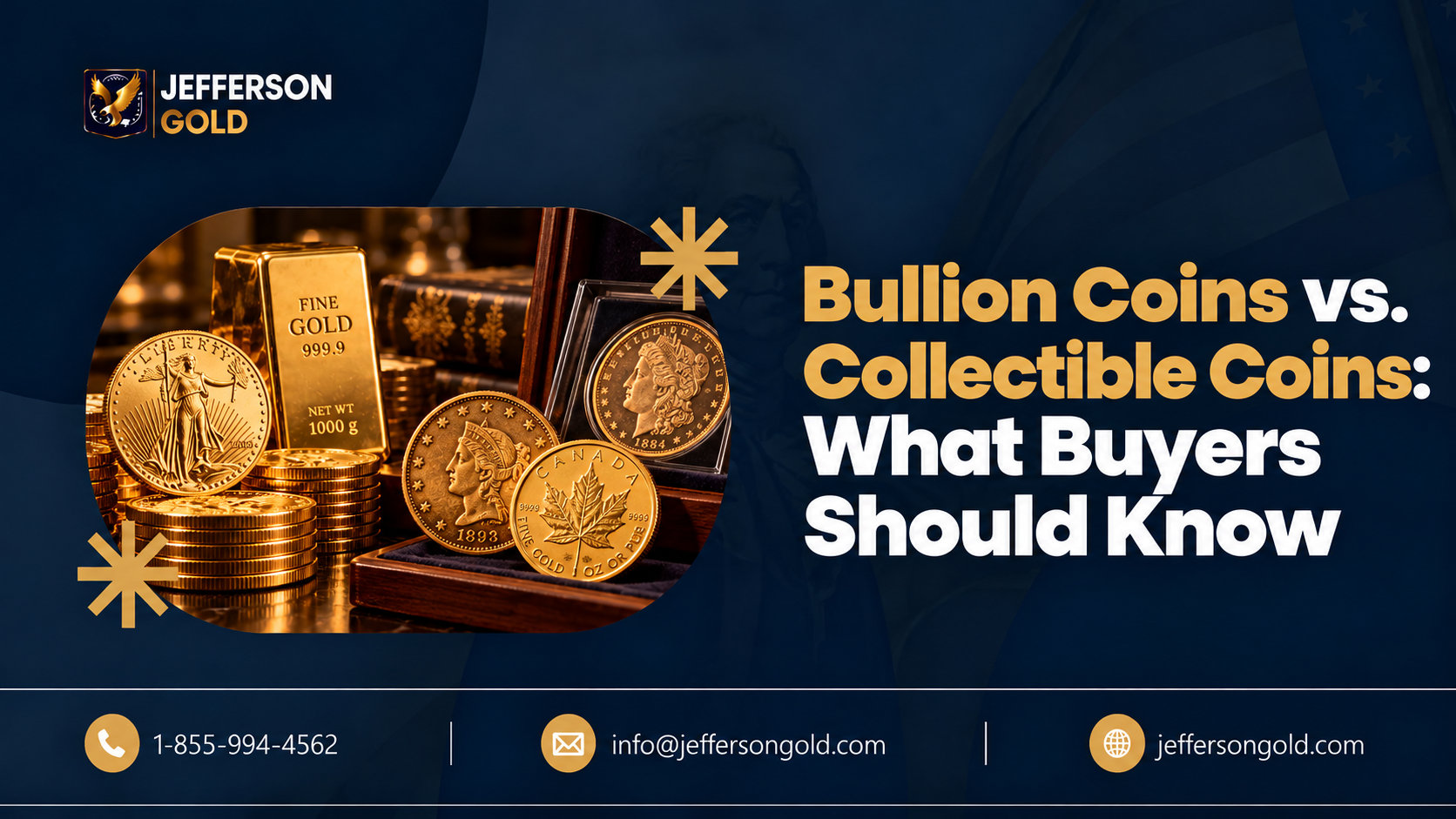
When buying physical gold, the word “coin” does not always tell you what you are actually buying.
Gold coins can fall into different categories, including bullion coins, proof coins, commemorative coins, and collectible or numismatic coins. While these products may all contain gold, they can differ significantly in how their value is determined.
For buyers who are primarily interested in physical precious metals, understanding the difference between bullion coins and collectible coins can make it easier to compare products based on their individual buying goals.
The distinction often comes down to what gives the coin its value. Bullion coins are generally valued primarily according to their precious-metal content, weight, and purity. Collectible coins may have additional value associated with characteristics such as rarity, age, condition, historical significance, or limited mintage.
The right choice depends on your goals, how you prefer to own physical gold, and whether you are considering direct delivery or a Gold IRA.
Bullion Coins vs. Collectible Coins at a Glance
| Feature | Bullion Coins | Collectible Coins |
| Primary basis of value | Gold content, weight, and purity | Gold content plus collectible characteristics |
| Common factors | Weight, purity, mint, product specifications | Rarity, age, condition, mintage, historical appeal |
| Typical purpose | Physical precious-metal ownership | Collecting and ownership of distinctive or historically significant coins |
| Design | Often follows an established bullion program | May feature special designs, finishes, or historical characteristics |
| Size options | Often available in multiple weights | Depends on the specific coin |
| Pricing | Closely related to the underlying metal value and product characteristics | Can be influenced significantly by collectible characteristics |
| Recognition | Often associated with established government-minted programs | Recognition can depend on the specific coin and collecting market |
| Gold IRA eligibility | Depends on the specific product and applicable requirements | Must be evaluated carefully under applicable IRA rules |
The key point is that not every gold coin should be evaluated in the same way.
What Is a Bullion Coin?
A bullion coin is a coin made from a specified amount of precious metal and is generally valued primarily according to the metal it contains.
For gold bullion coins, important details include the coin’s weight, purity, fine gold content, issuing mint, and product specifications.
Government-minted bullion programs can also provide recognizable products with established specifications. For example, the U.S. Mint produces American Eagle and American Buffalo bullion coins as part of its precious-metal programs.
Bullion coins can also be available in different sizes. Smaller denominations may appeal to buyers who prefer to own several individual units rather than one larger piece.
Jefferson Gold offers a range of physical gold products in different sizes. Buyers can review available options such as 1/10 oz Gold Coins and compare individual products based on their specifications.
What Is a Collectible Coin?
Collectible coins, sometimes called numismatic coins, are valued for characteristics beyond their underlying precious-metal content.
A collectible gold coin may derive additional value from factors such as:
- Age
- Rarity
- Condition
- Historical significance
- Limited mintage
- Collectibility
- Design or special finish
- Demand among collectors
This means two gold coins containing similar amounts of gold can have very different values if one has characteristics that make it desirable to collectors.
For example, a historical gold coin with a limited mintage and strong collector demand may be evaluated differently from a modern bullion coin containing a similar amount of gold.
That does not automatically make the collectible coin a better choice. It simply means that the buyer needs to evaluate the product differently.
Why the Difference Matters
The distinction between bullion and collectible coins matters because the factors you should consider can change depending on the type of product.
If you are comparing bullion coins, you may focus heavily on:
- Fine gold content
- Weight
- Purity
- Mint or refiner
- Product specifications
- Recognition
- Available sizes
- Purchase price
- Future flexibility
When evaluating collectible coins, you may also need to consider:
- Rarity
- Historical background
- Mintage
- Grade or condition
- Authentication
- Collector demand
- The specific characteristics that give the coin its additional collectible appeal
For this reason, buyers should look beyond a coin’s appearance when comparing products.
Bullion Coins: What Buyers Should Look At
1. Weight and Fine Gold Content
The stated weight of a gold coin is an important starting point, but buyers should also understand its fine gold content.
For example, a coin may contain an alloy in addition to gold. Therefore, comparing the total physical weight of two coins without considering purity can provide an incomplete picture.
Understanding weight, purity, and fine gold content allows buyers to make a more meaningful comparison between products.
2. Purity
Gold purity is commonly expressed as a fineness number.
For example:
- .999 fine gold represents 99.9% gold.
- .9999 fine gold represents 99.99% gold.
However, not every gold coin has the same purity.
Some established bullion coins use specific alloys as part of their design and specifications. The American Eagle Gold Bullion Coin, for example, uses a 22-karat composition, while the American Buffalo Gold Bullion Coin is made from .9999 fine gold.
The important point is to look at the actual specifications of the individual product rather than assuming that every gold coin has the same purity.
3. Mint and Source
The source of a coin can also matter.
Government-minted bullion coins often have established specifications and recognizable designs. Privately produced products may have different specifications and should be evaluated based on the issuing refiner or mint and the product information provided.
Jefferson Gold’s What to Buy guide explains several factors buyers can consider when selecting physical precious metals, including metal type, size, purity, and source.
4. Size and Flexibility
Bullion coins are commonly available in multiple sizes.
Smaller coins can provide more individual units, while larger coins consolidate more gold into fewer pieces.
Neither arrangement is universally preferable. It depends on how you want to hold your physical gold and how much flexibility you want among individual pieces.
For example, someone who prefers smaller individual units may consider fractional bullion coins, while another buyer may prefer larger products.
Collectible Coins: What Buyers Should Look At
Collectible coins require a somewhat different evaluation process.
1. Rarity
Rarity can influence the value of a collectible coin.
However, rarity by itself does not guarantee that a coin will have a particular value. Collector demand, condition, authenticity, and other characteristics can also matter.
2. Condition and Grade
The physical condition of a collectible coin can be especially important.
Collectors may use professional grading services to evaluate a coin’s condition and assign a grade. A small difference in condition can sometimes have a meaningful effect on how a collectible coin is valued.
This is different from simply looking at the coin’s gold content.
3. Mintage
Mintage refers to the number of coins produced.
A limited mintage can contribute to a coin’s collectible appeal, but limited production alone does not determine its value. The historical importance of the coin and demand among collectors can also play a role.
4. Historical and Collectible Appeal
Some buyers are interested in coins because of their history, design, age, or connection to a particular period.
In these cases, the coin may have appeal beyond its physical gold content.
That can make collectible coins interesting for people who enjoy the historical and numismatic side of precious metals.
Bullion Coins vs. Collectible Coins: How Is Value Determined?
One of the clearest differences between the two categories is how buyers may approach value.
A bullion coin is generally evaluated by considering the underlying precious metal, including its weight, purity, and fine metal content, along with product-specific factors.
A collectible coin may require a broader evaluation.
Its value can involve:
- The amount and purity of precious metal
- Rarity
- Condition
- Mintage
- Historical significance
- Collector demand
- Authentication and grading
- Product-specific characteristics
This means buyers should avoid comparing a collectible coin and a bullion coin solely by their face value, design, or physical size.
The same amount of gold can be present in two products while the products themselves are valued differently.
Which Type Is More Flexible?
Flexibility depends on the buyer’s goals.
Bullion coins may appeal to buyers who want established precious-metal products available in different sizes. Smaller bullion coins can provide multiple individual units, while larger products can consolidate more gold into fewer pieces.
Collectible coins can appeal to buyers who value the history, rarity, design, or collecting characteristics of a particular piece.
If your primary focus is the physical gold itself, it can make sense to compare bullion products based on their fine gold content, purity, size, source, and product specifications.
If collecting is an important part of your goal, additional factors such as rarity, condition, and historical significance may deserve greater attention.
What About Gold IRA Eligibility?
Gold IRA buyers need to take another step before choosing a coin.
Not every gold coin automatically qualifies for a Gold IRA.
Applicable IRS rules establish requirements for precious metals held within an IRA, including specific requirements relating to qualifying coins and bullion and how the metals are held.
The IRS explains that certain coins and bullion can qualify under applicable rules, while collectibles generally receive different treatment.
For that reason, buyers considering a Gold IRA should verify the eligibility of the specific product before purchasing it for a retirement account.
Jefferson Gold’s Gold IRA 101 guide provides additional information about Gold IRA requirements and the process involved in purchasing eligible precious metals.
A product should not be assumed to be IRA-eligible simply because it contains gold.
Bullion Coins vs. Collectible Coins: Which Should You Choose?
There is no single answer that applies to every buyer.
Instead, consider what matters most to you.
If your priority is physical gold content
You may want to focus on bullion products and compare:
- Fine gold content
- Weight
- Purity
- Mint or refiner
- Product specifications
- Available sizes
- Purchase price
If collecting is part of your goal
You may want to place more emphasis on:
- Rarity
- Condition
- Historical significance
- Mintage
- Authentication
- Collector demand
- Design and special characteristics
If you are considering a Gold IRA
Product eligibility should be one of the first questions you ask.
The specific coin or bullion product must meet applicable requirements. Always verify eligibility rather than assuming that a particular gold coin qualifies.
Questions to Ask Before Buying a Gold Coin
Before purchasing any gold coin, consider asking the following questions:
Is this a bullion coin or a collectible coin?
Understanding the category is the first step.
How much fine gold does the coin contain?
Look beyond the coin’s total weight and review its actual gold content and purity.
Who produced the coin?
Consider whether it was produced by a recognized government mint, established refiner, or another source.
What gives this coin its value?
For bullion, this may primarily relate to the precious metal content and product specifications.
For collectible coins, rarity, condition, history, mintage, and collector demand may also matter.
Is the product eligible for a Gold IRA?
If you are purchasing through a retirement account, verify the specific product against applicable requirements.
Does the product fit your buying goals?
The right format depends on what you want to own and how you prefer to hold it.
A Simple Bullion vs. Collectible Coin Checklist
Before making a decision, compare these details:
- Coin type — Is it bullion, proof, commemorative, or collectible?
- Weight — What is the stated weight?
- Fine gold content — How much pure gold does it contain?
- Purity — What is the stated fineness?
- Source — Which mint or refiner produced it?
- Mintage — Is the product limited or widely produced?
- Condition — Is the coin graded or otherwise authenticated?
- Collector appeal — Are rarity, history, or design important to its value?
- Purchase price — How does the price compare with the amount and characteristics of the gold received?
- IRA eligibility — If applicable, does the specific product meet retirement-account requirements?
- Future flexibility — Does the format fit how you want to own your physical gold?
This checklist keeps the decision focused on a product’s actual characteristics rather than appearance alone.
Explore Gold Coin Options Through Jefferson Gold
Understanding the distinction between bullion and collectible coins can help you ask better questions before purchasing physical gold.
Jefferson Gold provides access to physical gold products in different sizes and formats. Buyers can review available 1/4 oz Gold Coins or explore 1 oz Gold Coins and Bars to compare products based on their specifications.
For buyers who want to understand how gold content and product characteristics relate to value, the Jefferson Gold Calculator can also be a useful research tool.
If you are considering physical gold for a retirement account, review the applicable requirements and consult a qualified professional about your individual circumstances.
Final Thoughts
Bullion coins and collectible coins may both contain gold, but they are not evaluated in exactly the same way.
Bullion coins are generally focused on the underlying precious-metal content, including weight, purity, and fine gold content. Collectible coins may have additional value associated with rarity, condition, age, mintage, historical significance, and collector demand.
The best choice depends on your individual buying goals.
Before purchasing, take the time to understand what type of coin you are considering, how much fine gold it contains, who produced it, what factors determine its value, and whether it meets applicable requirements if you are considering a Gold IRA.
If you have questions about physical gold products or want to discuss your options, contact Jefferson Gold at 855-994-4562.